
Amusement Devices
State of Safety 2025
Yearly Trends: Amusement Devices
We oversee the installation and operation of amusement devices throughout British Columbia in accordance with the Elevating Devices Safety Regulation. We regulate a range of amusement devices from waterslides and bouncy castles to large scale rollercoasters.
As we work with the Ministry toward adopting the American Society for Testing and Materials (ASTM) code that outlines amusement standards across North America, we are reviewing our amusement ride and device program. In 2025, this work included a comprehensive review of program elements to ensure they align with the new standard, are current and relevant, and clearly define duty‑holder responsibilities. This work positions us and operators to adapt effectively to future needs while maintaining our commitment to public safety.
As an active member of the ASTM Committee F24 on Amusement Rides and Devices, we participated in multiple subcommittees and contributed to the development of new standards, including the life‑cycle guide and mountain coaster standards. We also supported improvements to several existing standards, including the Trampoline Court Standard (F2970), Aerial Adventure Course Standard (F2959), Operations and Maintenance Standard (F770), Inflatable Devices Standard (F2374), and the Canadian Standard (F2783).
These meetings and partnerships provide valuable opportunities to learn from safety partners, strengthen industry relationships, and share our expertise as we continue to enhance safety outcomes across BC.
26
Incidents reported to us in 2025
14
Injuries reported to us in 2025
468
Assessments completed in 2025
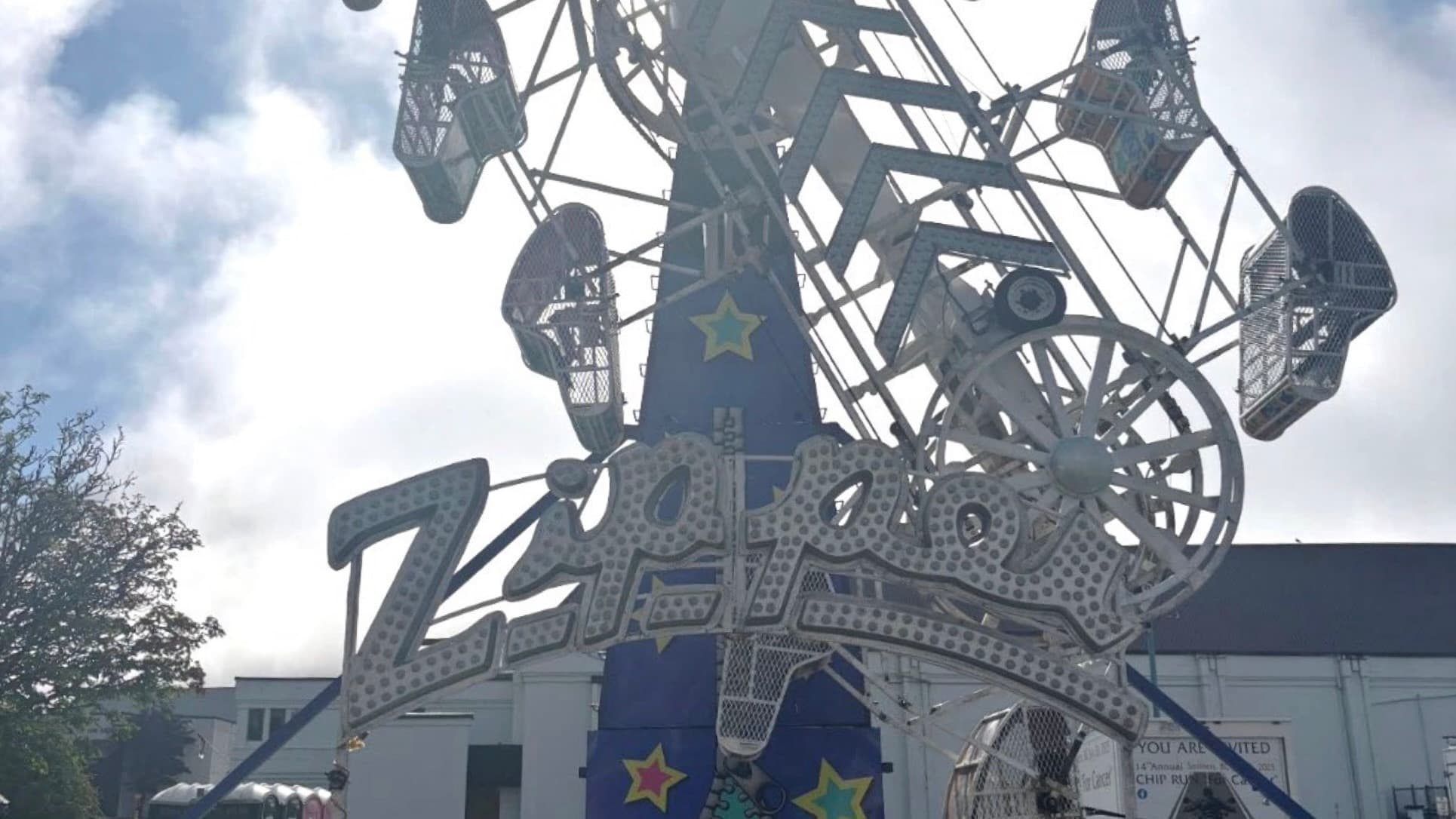
Fatal Injury Involving Zipper Ride
An experienced amusement ride attendant who did not typically work with the Zipper ride had volunteered to assist the ride operator. During a typical pause in operation of the ride, the attendant stepped into the ride’s path to collect fallen items from underneath the ride. At the same time, the operator running the ride was approached and distracted by members of the public.
A few seconds later, the operator resumed ride operations in the opposite direction, unaware that the attendant was still in the path of the ride. A passenger carrying unit then struck the attendant, tragically causing fatal injuries.
Factors that contributed to the incident included no communication between attendant and the operator, limited physical barriers that allowed the public to interfere with the operator, and routine unsafe practice of working inside dangerous areas.
Learn About This Incident
Incidents
Twenty-six incidents were reported in 2025, an 18% decrease from the previous year. Of the reported incidents, six were ranked as “insignificant,” eight ranked as “minor,” and four ranked as “moderate,” while two ranked as “major.” Five incidents were “under assessment” by the end of 2025.
Click to Enlarge
Injuries
Fourteen injuries were reported to us in 2025, which represents a decrease of 19.35% compared to 2024. Of the injuries reported, four were ranked as “insignificant,” five were ranked as “minor,” two were ranked as “moderate,” two were ranked as “major,” and one was fatal.
It is important to note that we receive injury reports and descriptions from operators or first responders at the time of, or immediately following, an incident. Injuries may develop after the initial reports were made to us, and the long-term effects of a resultant injury may not be recorded as part of our investigation.
Click to Enlarge
Permits
In 2025, we issued 54 installation permits and saw 568 active operating permits in the amusement devices technology. Installation permits increased by 4% compared to 2024. Operating permits remained the same compared to 2024.
Installation Permits Issued by Year
Click to Enlarge
Active Operating Permits by Year
Click to Enlarge
Assessments
Our safety officers completed a total of 465 assessments in 2025. Of the 465 assessments, 418 were physical assessments, and 47 were remote assessments. The results of in-person assessments included: 265 “conditional pass,” 62 “passed,” and 91 “failed”. The results of remote assessments included: 22 “conditional pass,” 19 “passed,” and six “failed.”
Learn more about how we define these assessment outcomes.
Physical Inspections Completed by Hazard
Click to Enlarge
Remote Inspections Completed by Hazard
Click to Enlarge