
Passenger Ropeways
State of Safety 2025
Yearly Trends: Passenger Ropeways
We oversee the safety of passenger ropeways throughout British Columbia in accordance with the Safety Standards Act and the Elevating Devices Safety Regulation. These include tramways, gondolas, chairlifts, rope tows, and passenger conveyors.
In 2025, we continued to engage with industry and share safety insights through presentations at the Canada West Ski Areas Association (CWSAA) Spring and Fall meetings. At these events, we engaged operators to clarify regulatory requirements for the training and competency of maintenance personnel on passenger ropeways and conveyors.
At CWSSA, we co‑presented an education session highlighting key changes in the Z98:2024 Passenger Ropeways and Passenger Conveyors standard. In parallel, we are working with the Ministry of Housing toward adoption of the latest edition of the CSA Z98 standard. To prepare, we analyzed the impacts of the new standards, reviewed existing regulatory tools for alignment to clarify duty‑holder accountability, and encourage consistent compliance.
As an active member of the Z98 Code Committee, we serve on several subcommittees and have submitted proposals for code changes related to non‑destructive testing, operations, and conveyor systems.
Together, these efforts strengthen our regulatory program and support a safer, more consistent operating environment for ropeway passengers and industry partners across BC.
128
Incidents reported to us in 2025
51
Injuries reported to us in 2025
208
Assessments completed in 2025
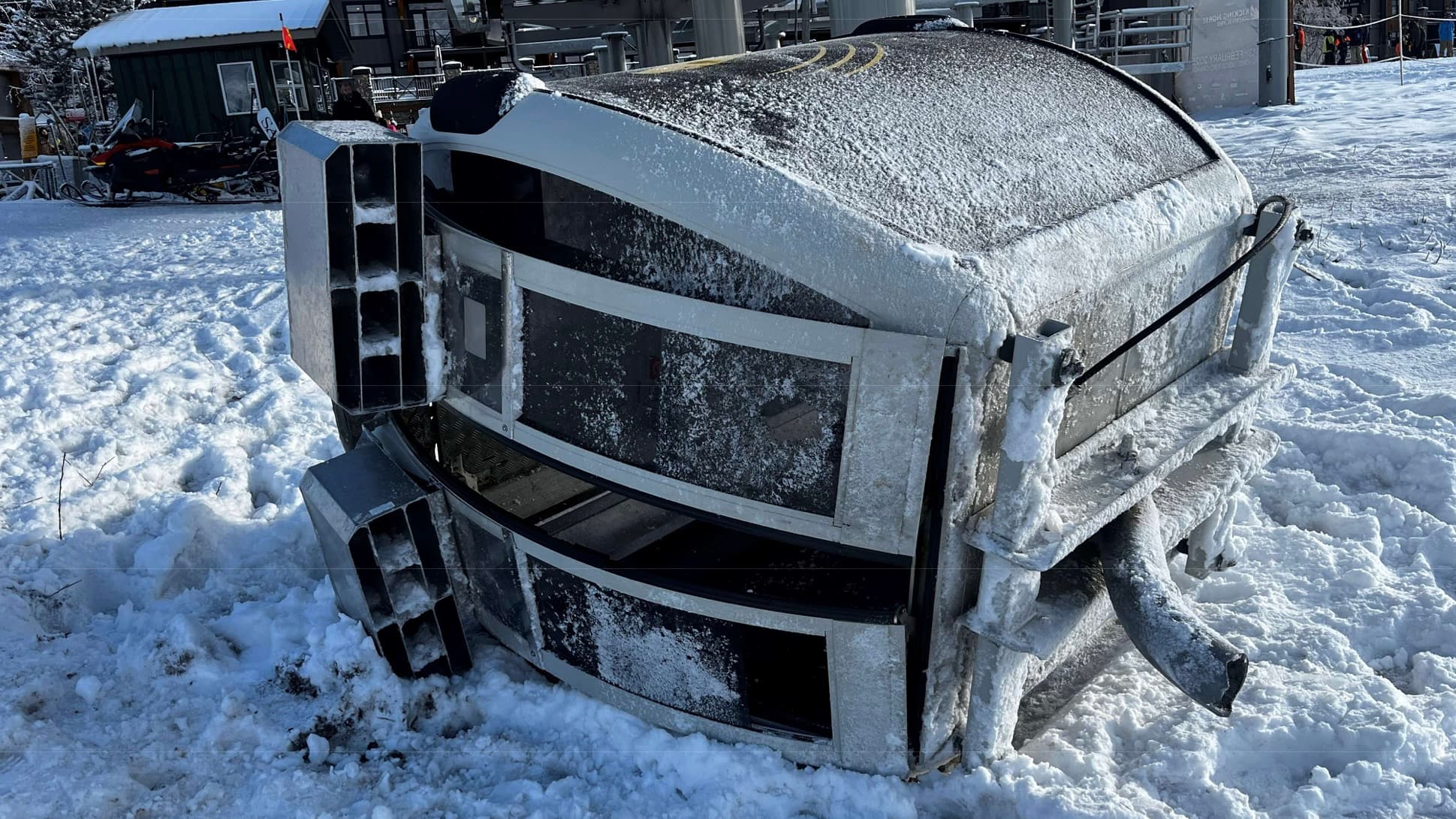
Gondola Cabin Falls at Kicking Horse Mountain Resort
In March 2025, a gondola cabin on the Golden Eagle Express at Kicking Horse Mountain Resort fell to the ground with passengers onboard after its cracked hanger arm snapped just after leaving the bottom station. The arm had been made brittle by manufacturing conditions, including cold bending and galvanizing, and its deterioration was accelerated by repeated high‑force impacts with station structures over years of operation. Although the gondola’s daily checks and multiple non‑destructive tests had not identified the crack, it had been progressing. When it finally fractured, the cabin dropped approximately 1–1.5 meters, resulting in minor injuries to passengers, and the remaining cabins required a complex seven‑hour manual evacuation.
Based on the findings of this investigation, we’ve issued recommendations aimed at manufacturers, owners, and operators of passenger ropeways to better understand and mitigate specific risk factors.
Learn About This Incident
Incidents
There were 128 incidents related to passenger ropeways reported to us in 2025, which was in line with the 120 incidents reported in 2024. Of the 128 reported incidents, one was ranked as “severe”, three were ranked as “major,” while 26 were ranked “moderate,” 34 were ranked as “minor,” and 52 ranked as “insignificant.” There were 12 incidents “under assessment” as they were still under investigation at year’s end. Misloading or unloading incidents and falls from carriers continue to be leading causes of injury.
Click to Enlarge
Injuries
Fifty-one injuries were reported to us in 2025, which is similar to 2024. Of these injuries, eight were ranked as “insignificant,” 21 were ranked as “minor,” 20 were ranked as “moderate” and two were ranked as “major.” Many injuries, such as falls or misloadings from chairlift carriers, are tied to behavioral factors, with some incidents involving children.
Click to Enlarge
Permits
In 2025, we issued 34 installation permits for alterations and repair of ropeways, an increase of 45% compared to the previous year. This increase is due to clients proactively bringing aging equipment up to current code by using new technology and extending the life cycle of the older equipment. Owners are actively looking at ways to enhance passenger safety with the addition of 11 lifts getting automatic loading gates, which reduce the challenges related to passengers loading a chair lift.
We saw 209 active operating permits, which is similar compared to 2024.
Installation Permits Issued by Year
Click to Enlarge
Active Operating Permits by Year
Click to Enlarge
Assessments
Our safety officers completed 208 assessments in 2025, which represents a 2% decrease compared to 2024. Of this total, 188 were in-person assessments while 20 were remote assessments.
The results of physical assessments included: 21 that “passed,” and 22 that “failed," and 145 that were each given a “conditional pass.” The results of remote assessments included: 12 that were each given a “conditional pass,” six that “passed," and two that “failed.”
Learn more about how we define these assessment outcomes. The most common non-compliances are related to the submission of reports, documented procedures, training and inspection information. and inspection information.
Physical Inspections Completed by Pass, Failed
Click to Enlarge
Remote Inspections Completed by Pass, Failed
Click to Enlarge